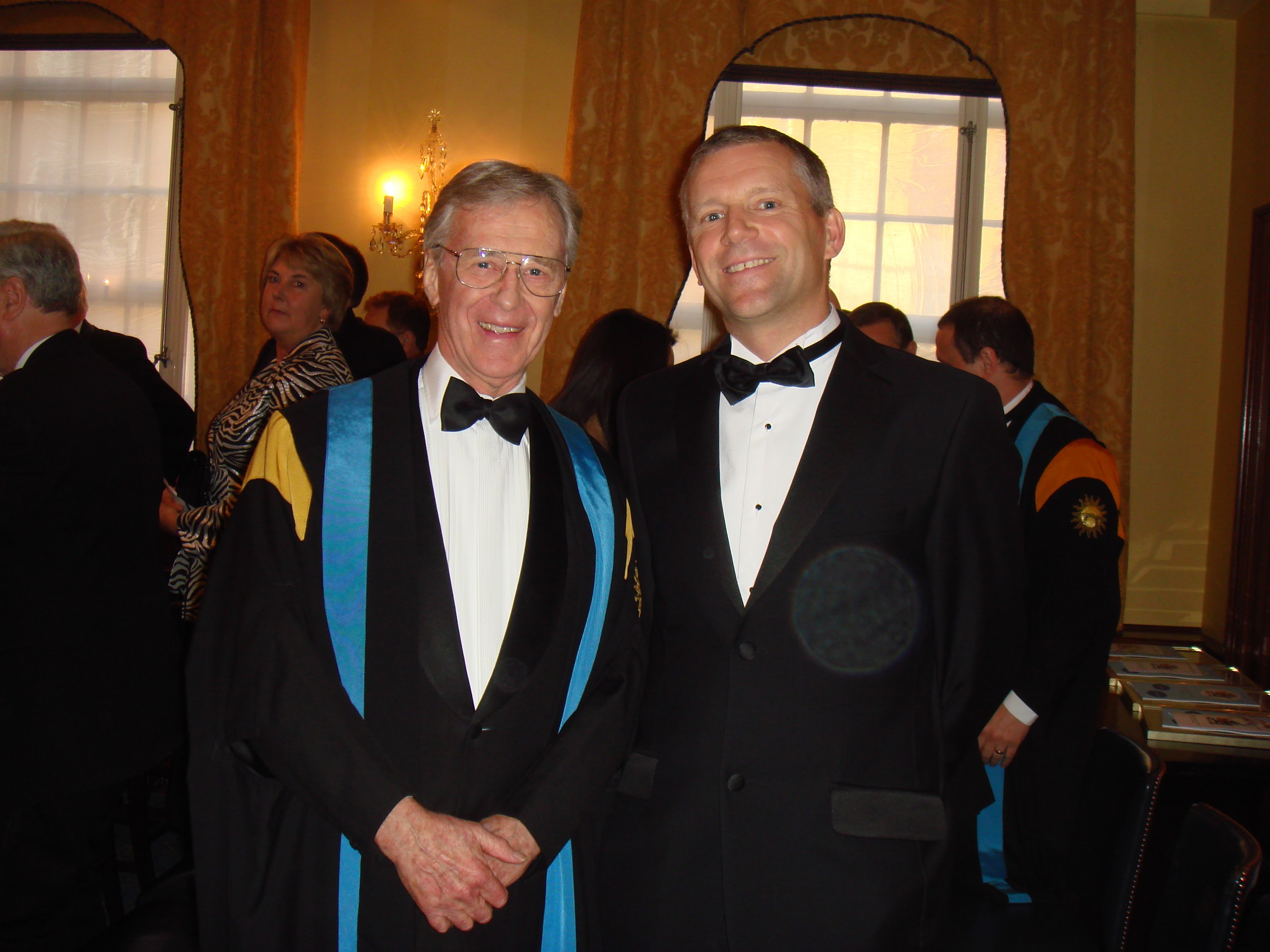
Hi dad, how are you doing? You have some colour back in your cheeks and your cough sounds a bit better. Shall I move the pillow to make you more comfortable?
Can you hear me OK?
And so it was in my last few moments with dad, the night before he slipped away. I don’t know if he felt it too, but with his rapidly declining health it seemed likely to be the last time we would spend together. He hadn’t spoken in a few days and so there was no conversation to be had, except for the slightest of expressions and movements in his eyes. What do you say to a man, a father, a role model who has shaped and influenced your life, often in ways you don’t even know? I had been gone, out of the country for 35 years and only back for two, so there was a lot to cover.
Do you remember the time you came and gave a talk at my school when I was in the 6th Form at Wootton? You came to put right the Head of 6th form, a buffoon of a man who, when I told him I was thinking of becoming an engineer, was visibly crestfallen and said: “Oh, I always thought you’d do something creative. Do you really want to fix trains for the rest of your life?” He was supposed to advise us about our careers. Instead, he set in motion me leaving the country for the whole of my working life, to find somewhere where engineers are more highly valued. My tribe. You didn’t leave the UK, but you easily could have. You had many offers and opportunities. You decided to stay here, for your family, for the country, to carry the flag for engineering, particularly to young people. That day, standing there in front of a room full of 17 year olds, I probably looked mortified with embarrassment and wanting to disappear under the desk. But really, secretly, I was very proud of you, my dad, the professor, the entrepreneur, the engineer. I don’t think I could have said it out loud at the time, but I already knew I wanted to be like you. Thank you for being there that day.
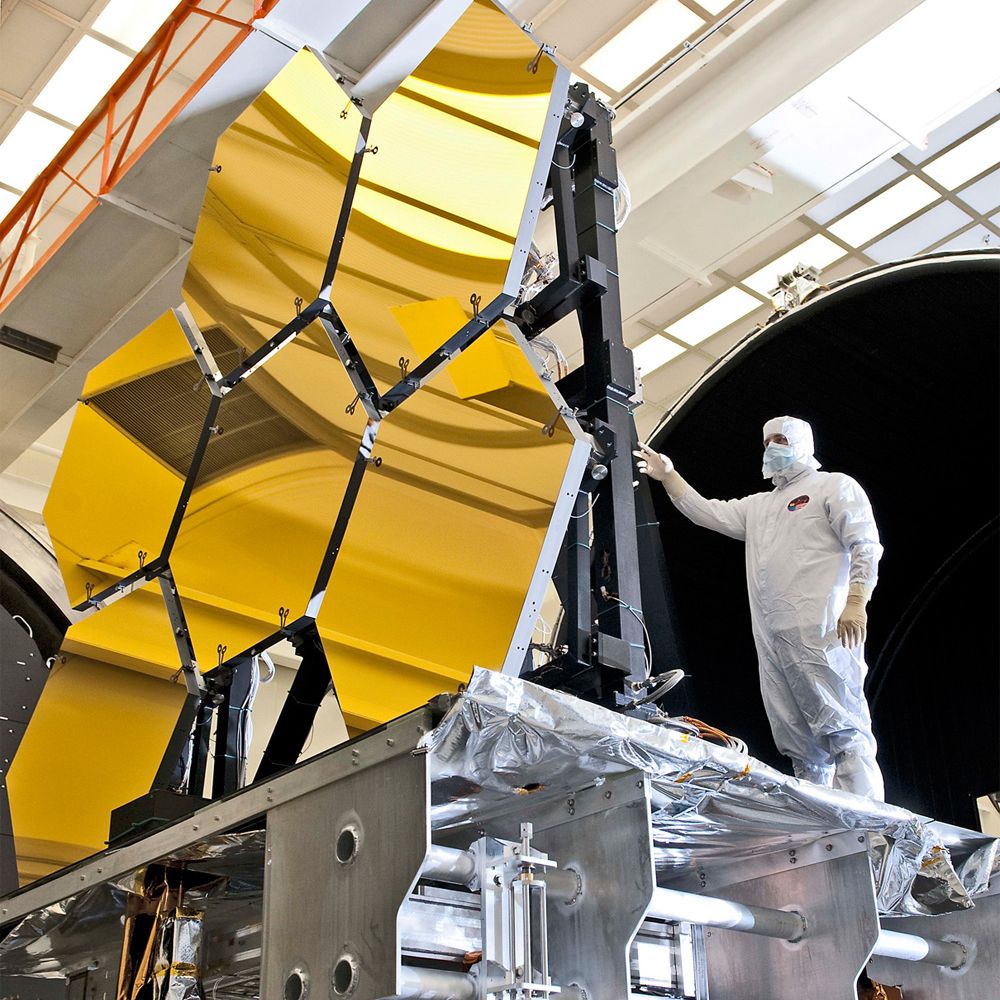
Dad told us his favourite quote from Theodore von Kármán, an expert in supersonic flight who started NASA’s Jet Propulsion Lab: “Scientists discover the world that exists. Engineers create the world that never was.” I heard him say this many times, as I have said it too. To convey the creative excitement every day of being an engineer, inventing and designing new things; never the same day twice. Dad lived his life “to make the world a better place”. He did this by designing the machines that made the James Webb Telescope possible, for the scientists to discover the world that exists. And the nanometre precision machines so that the engineers in the semiconductor industry could build the chips that we all rely on every day. To create the world that never was.
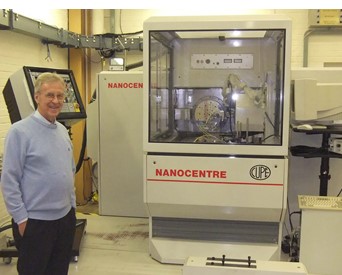
I remember going to see dad’s high precision machines at Cranfield when I was a child. Early on, the real fun was playing on the phones, calling my brother in the other room and stealing the sugar cubes. It wasn’t until later that I began to realize what was going on here: Big turntables, the size of a small car, spinning 20 times per second. Machines that could cut, grind or polish a chunk of metal to within a thousandth of the diameter of a human hair.
It’s easy to take our parents for granted. As a child it all seemed normal and what your dad did. It wasn’t until I went to work in his office one summer when I was 17 that it started to dawn on me that he wasn’t just any dad.
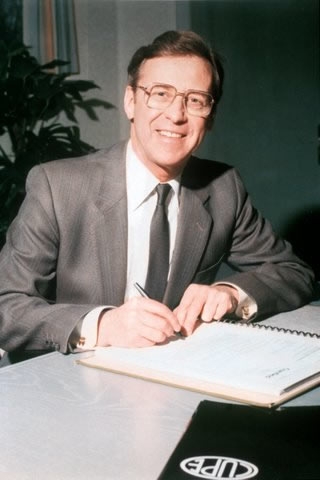
He ran a small company with a team of about 50 people, a spinout from Cranfield University funded by the British Government to build prototype high precision machine tools. He was also the world’s first Professor of Precision Engineering (at least, the first outside Japan), but his teaching responsibilities were second to the sheer joy he got from bringing his beautiful machines to life.
That summer I got to see him up close, although he worked in such a peripatetic whirl, it was hard to keep track of him.
One morning he took me on his rounds, to go see the shop floor where the machines were being built. There was a mini crisis that day: a machine they’d installed all the way in Minnesota wasn’t working properly and someone needed to go fix it, to manually grind down a metal guideway by just a few thousandths of an inch. But the skilled technician who was going had never been out of the country before, didn’t have a passport. He was visibly nervous. Dad patiently and lovingly walked him through exactly what he needed to do, reassuring him that everything would be ok, offering to provide help to his family while he was gone. And then he said: “You are the best person in the world at what you do, do you know that? Thank you for going, you are going to save the company.” This was dad’s love of people, his generous spirit and his keen interest in the lives of people around him. That day I witnessed him transform in my eyes from my dad to a compassionate leader. For him, it was just another day as the CEO; for me it was a revelation.
You influenced me much more than you probably realize. Thank you. And certainly more than I realized at the time. It started the day you took me to the model railway shop in Bedford. Four pieces of Hornby track. Straights. Not much use on their own, but I was super excited because I knew it meant I was getting my first train set for Christmas. Your engineers would make longer wires for me, to connect far away signals — a process that seemed like magic to 7-year-old me. They could make wires longer whether they were red, green or yellow! Later, you’d borrow the first Acorn Atom computer from work, which I spent hours hunched over at home programming the game Othello, and launching me on a lifetime love of computers. I kept that computer way too long, way past the date you’d promised to return it, and you had to pry it from my hands to avoid any further embarrassment at work.
I didn’t realize then how much I was following in your footsteps, and I definitely wasn’t going to admit it — I would say dismissively that there was no way I’d be a mechanical engineer like you. Instead I went to study electrical and electronic engineering. Later, when finishing up my PhD in California and thinking about what I’d do next, the one thing I was confident about: I wasn’t going to be a professor — that’s what my dad did. And when I inevitably became a professor a year later, I’d tell my students not to call me Professor McKeown — that was my dad, not me. It took me a while to realize, to admit, how much I was following your path.
Your influence didn’t stop there. Every time I saw you, you’d interrogate me about what I was doing, what I was working on, what I was thinking, how my latest startup was doing. You’d offer me advice on everything. I could tell how proud you were, and how you emotionally rode the same roller coaster with me. Sorry for the times I bristled. It’s not easy accepting that you are really following in someone else’s footsteps — particularly your dad’s.
You drove us all to a CIRP conference in Bled, Yugoslavia, years before there were proper roads, camping in the rain. Later, you’d take me to conferences in Davos, Eindhoven and San Francisco; when I look back, I realize you were encouraging me to become an engineer, weren’t you?
I’m pretty sure you were behind me being elected to the Royal Academy of Engineering so that we’d be one of the first father-son pairs. Thank you for that too.
“Can I pickamy husband please?”, I would say into my plastic telephone sitting in my high chair, mimicking mum calling dad at his office. Mum did the heavy-lifting of raising three boisterous sons in an era when we’d say that’s just how it was. The Germaine Greer on the bookshelves, the New Scientist on the coffee table, the quickly solved Guardian cryptic crossword, and her encyclopedic knowledge of plants, birds, history and famous scientists meant we’ve always known that mum is the real academic and scholar in the family. She has boundless intellectual curiosity and in another life, she’d be the Cambridge professor of history, or literature, or computer science. While dad inspired me to be an engineer, she inspired all of us to be intellectually curious.
You could be a bit scary when I was a teenager. When I was 15, I did badly in my school exams. From mum, I learned that you were disappointed and had expected me to do better. That was enough to make me work hard all the way through until I left school. It was the kick in the backside I needed. Thank you for that — although I am sure I didn’t say thank you at the time, or enough.
We get glimpses into our parents’ hearts that we don’t really know until we are adults. When I had just moved to California in the early 1990s, dad arranged to be a visiting professor at Berkeley for six months while I was a student there.
I’ll never forget you sitting at our kitchen table listening to Rachmaninoff’s 2nd Piano Concerto, with tears running uncontrollably down your cheeks.
It was probably a bit embarrassing for dad, a 65-year-old man, a CEO, to be sitting there crying to a piece of music he’d heard a thousand times before. But to me it was very touching. Here was an engineer with an intuition for how big cold chunks of metal could be machined — and yet this was alongside and in harmony with romantic dreams, and a love of music, theatre and beauty in the world. We tend to divide and categorise people into science or humanities; precise and objective or vague and subjective; academics or sport; left or right. Despite his love of precision in his machines and his schedule, his intellectual curiosity about everything made him very comfortable with uncertainty. Dad taught me that all of these things live in everyone, all at the same time.
Dad loved to travel and he always wanted to go see the world. It started when I was 4 years old, with our brave parents driving us to France, Italy, Spain or Switzerland for four-week camping trips.
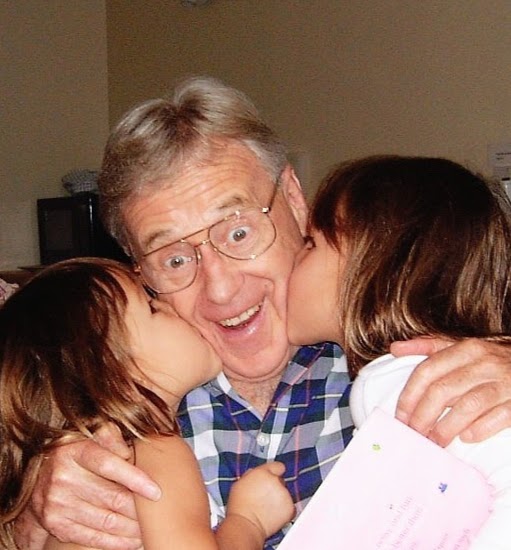
You’d always find an excuse to come visit your sons when we lived in Singapore, Thailand or California. Mostly it was to see your grandchildren, who you adored. In some ways you were making up for the lost time when you’d be engrossed in work in the middle of your career when we were kids. The beam on your face when you see one of your grandchildren says it all — you are a wonderful grandpa.
He taught me that the world is not meant to be divided — that the love of art and the love of a finely tuned machine can live in harmony. That a man who prizes a precise schedule can be comfortable with the world’s grandest uncertainty. That is his final, most beautiful lesson: to live fully in the complex, wonderful whole of it all.
In his room that night, I ran out of words and continued to hold his hand in silence. I saw the familiar almost imperceptible turn of his eyes toward me — the slightest of expressions. I squeezed his hand, pulled the pillow up, and walked out to let him sleep.