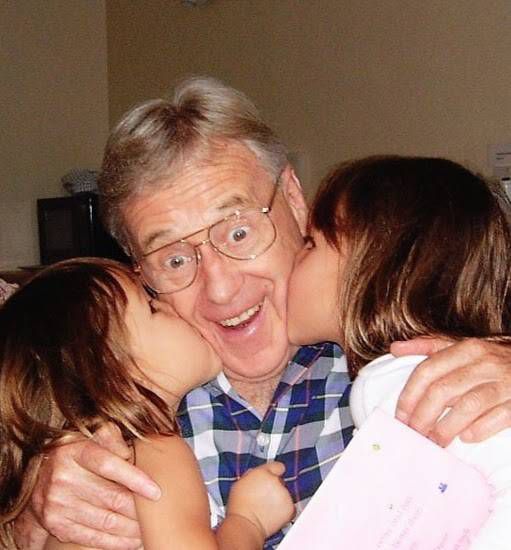
16 August 1930 — 10 February 2026

Professor
Patrick Arthur
McKeown

OBE  ·  FREng  ·  Founding President, euspen  ·  CV

"I would like my funeral to be a celebration of the life of someone who has had the greatest of good fortune."
— Pat McKeown, 2003

95 Years lived
50+ Years at Cranfield
9 Grandchildren
1,000+ euspen members
Professor Pat McKeown

Professor Pat McKeown

In Memoriam

Obituaries — February 2026

Obituary

Patrick McKeown obituary

Engineer and Cranfield University professor who pioneered ultra-precision machine tools crucial for modern technology and astronomy

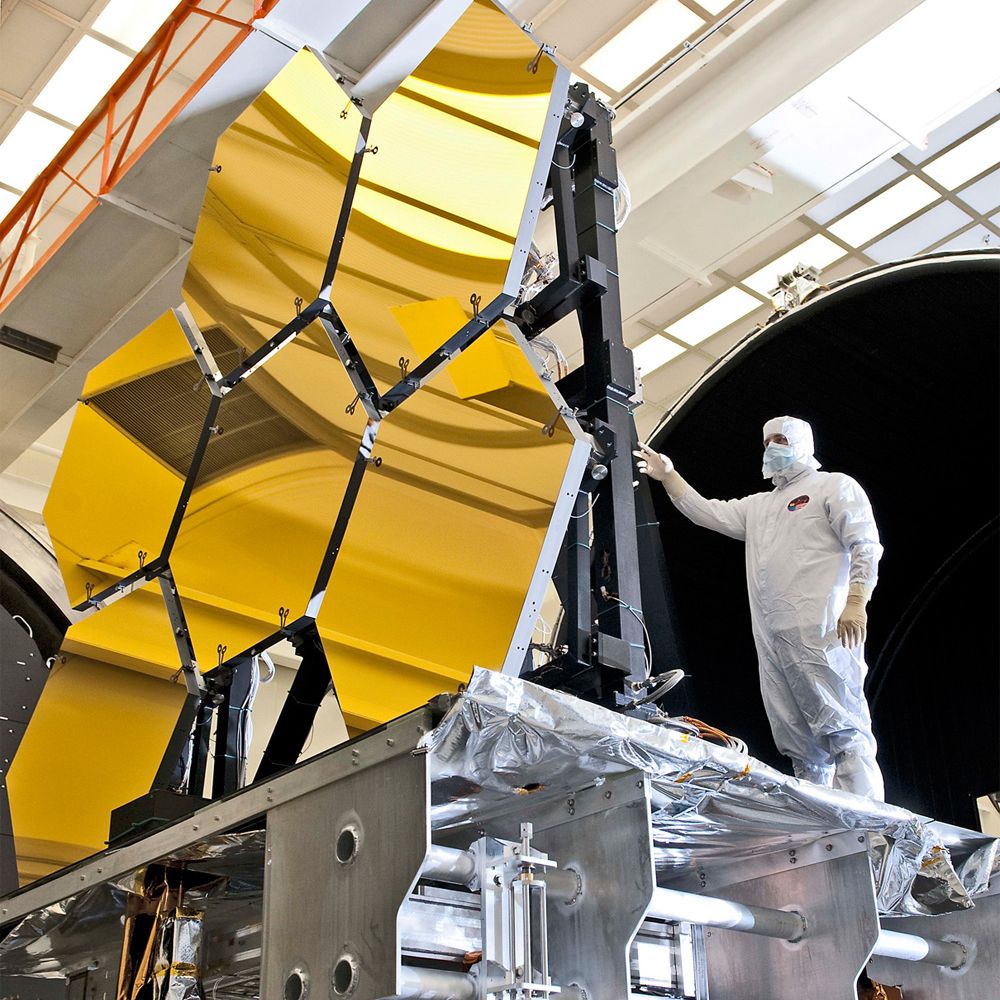
Patrick McKeown, who has died aged 95, was a towering figure in the field of ultra-precision engineering. His work laid the foundations for the manufacture of the microscopic integrated circuits inside modern computers and mobile phones, as well as the colossal, perfectly shaped mirrors of the James Webb Space Telescope.

Born in Cricklewood, Middlesex, to Robert (Bob) McKeown, an aeronautical inspector, and Bessie (Gus) White, Pat’s childhood was heavily shaped by the Second World War. The family survived the Coventry Blitz in 1940 before relocating to Prestwick, Scotland. There, Bob oversaw the receipt and inspection of American lend-lease aircraft. These early experiences, including a thrilling first flight in the tail turret of a Liberator bomber at age 11, ignited Pat’s lifelong passion for aeronautics and engineering.

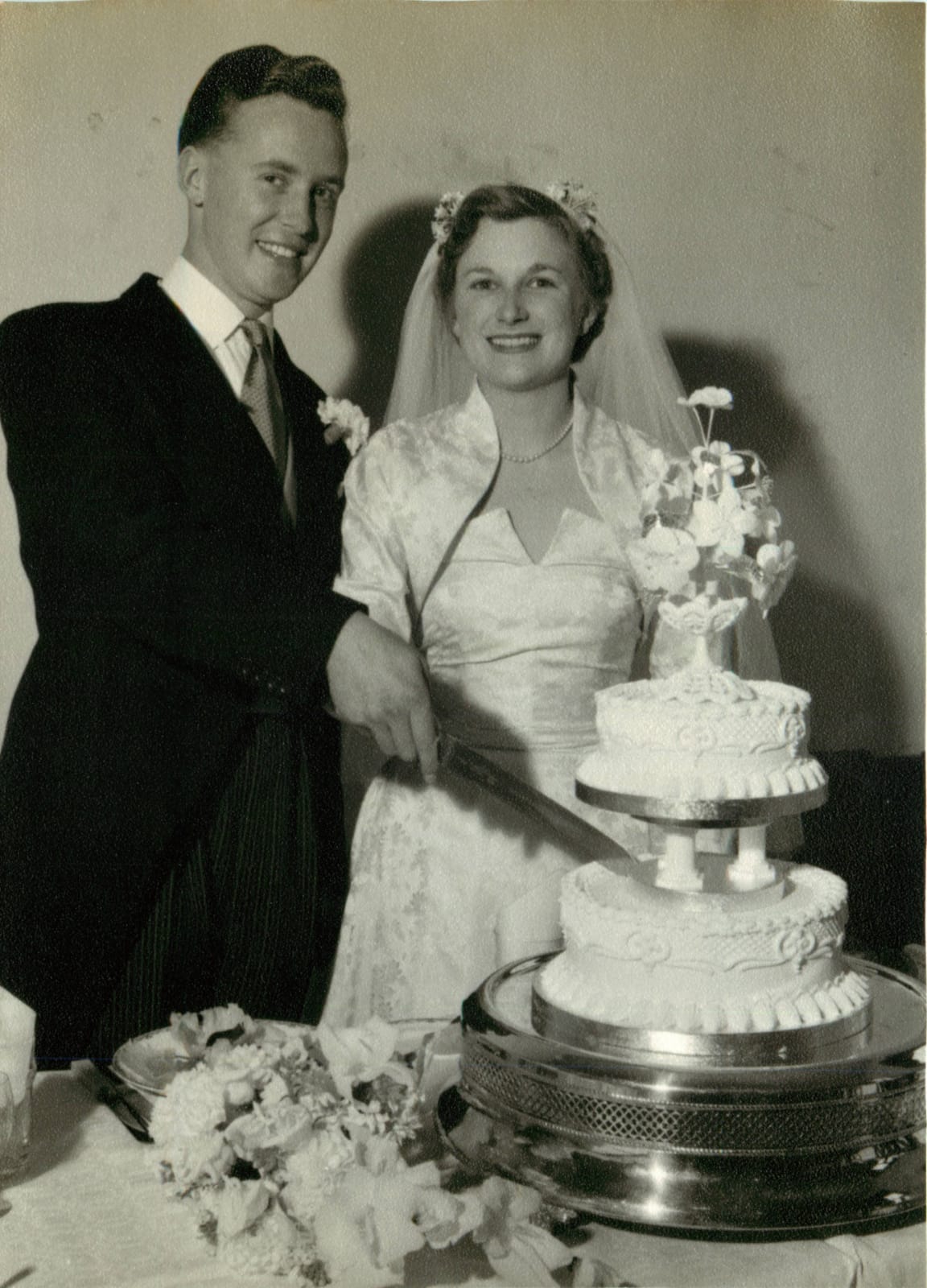
He attended Bristol Grammar School, where he excelled in athletics and rugby, and met Mary Heath, whom he would marry in 1954. After National Service in the Royal Engineers, Pat undertook a student apprenticeship at the Bristol Aircraft Company. Recognising his potential, his managers encouraged him to attend the College of Aeronautics at Cranfield, where he completed an MSc in 1956.

That same year, Pat joined the Swiss metrology and machine-tool company Société Genevoise d’Instruments de Physique (GSIP). Just two weeks into the job, the Suez Crisis intervened, and he was deployed to Port Said for five months with the Port Maintenance Squadron. His swift departure earned him the affectionate nickname the “two-week wonder” among his GSIP colleagues. Upon his return, he spent the next 13 years working in Geneva and Newport Pagnell, developing ground-breaking methods for defining and improving the 3D accuracy of machine tools.

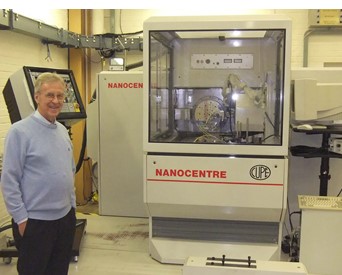
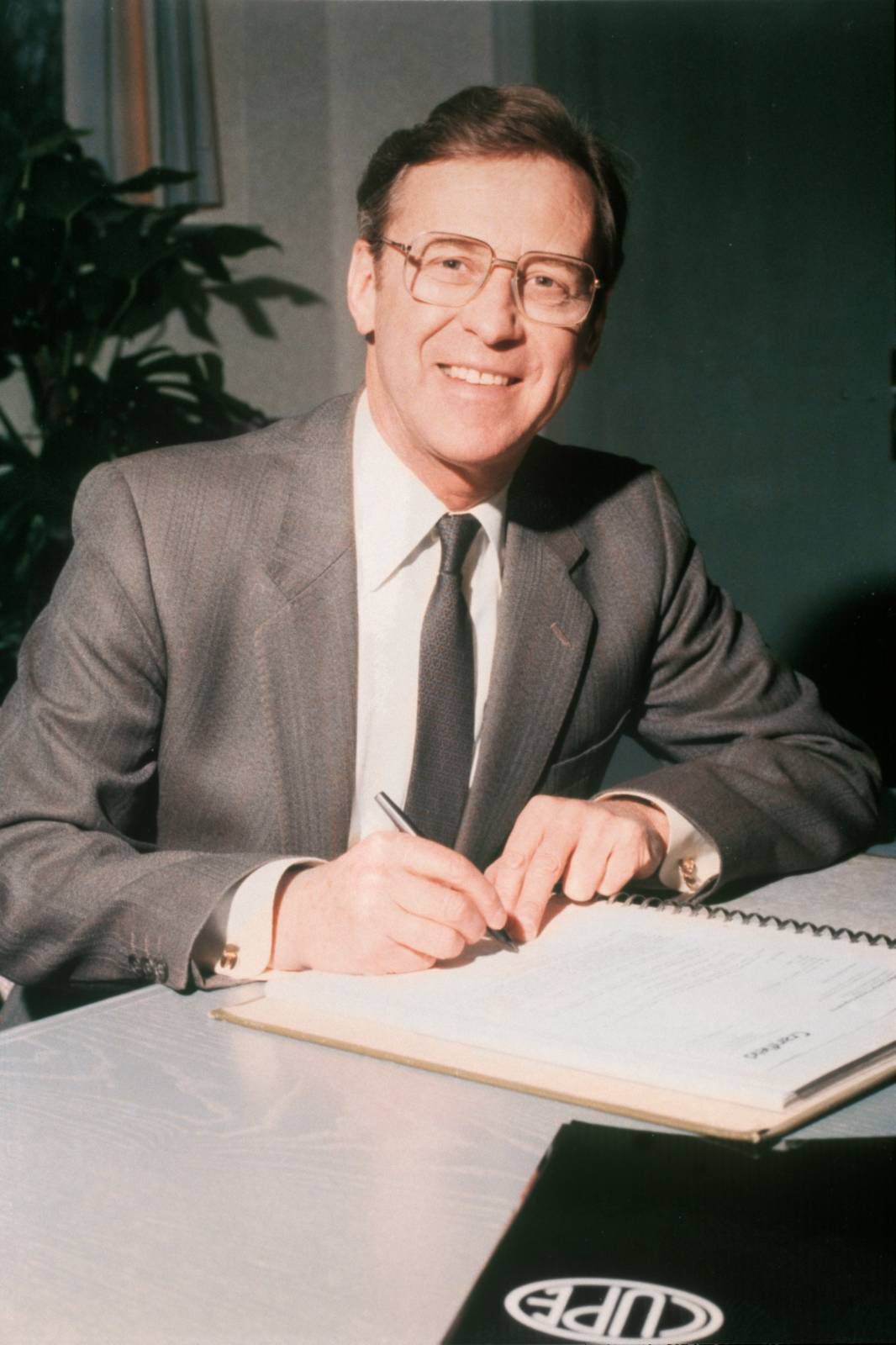
In 1968, Pat returned to Cranfield. Alongside Professor John Loxham, Pat secured funding through the Wilson “White Heat of Technology” programme to establish the Cranfield Unit for Precision Engineering (CUPE). Under Pat’s directorship, CUPE became a self-supporting, world-leading centre of excellence in ultra precision engineering. Pat’s team designed and built production machines and computer numerical control (CNC) systems for many international blue chip companies providing nanometre levels of accuracy. CUPE machines produced mirrors for numerous space telescopes including the recent James Webb Space Telescope. Today’s most advanced integrated circuits with sub 5 nanometre scale features are created from key optics manufactured using CUPE-derived ultra precision machine tools. CNC systems invented by CUPE have been applied to over £2.5 billion of high precision machine tools. In teaching, the so-called “McKeown 11 principles of machine design” have become seminal text, used to train thousands of engineers globally.

A passionate advocate for international collaboration, Pat was the driving force behind the creation of the European Society for Precision Engineering and Nanotechnology (euspen), serving as its founding president in 1999, and was past president of CIRP (the International Academy for Production Engineering). His contributions were recognised with numerous accolades, including an OBE in 1991, the Faraday Medal, the Georg-Schlesinger Preis, and lifetime achievement awards from engineering societies in America, Japan, and Europe.

Beyond his engineering triumphs, Pat was a dedicated humanist. A patron of Humanists UK, he firmly believed that people could live good, ethical lives based on rationality and science, without supernatural beliefs. He campaigned vigorously for a secular state, inclusive education, and freedom of expression. He famously remarked that while he wondered at the magnificence of the real world, he could not relate it to God or any divine being.

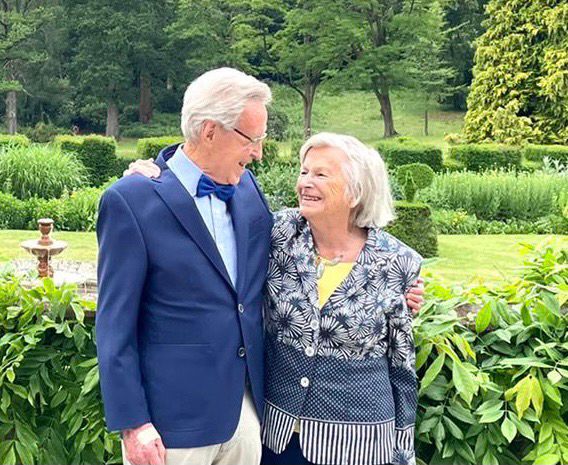
He is survived by Mary, a historian, to whom he was married for 71 years; their three sons, Jonathan, Jeremy, and Nick; nine grandchildren; and six great-grandchildren.

Humanists UK

Professor Patrick Arthur McKeown OBE FREng

Pioneer in ultra-precision engineering, founding president of euspen, devoted humanist — 1930–2026

Professor Patrick Arthur McKeown OBE FREng — pioneer in ultra-precision engineering, founding president of euspen, devoted humanist, beloved husband, father and grandfather — passed away peacefully on 10 February 2026, aged 95.

Born in August 1930, Pat grew up moving across Britain as his father’s career in aviation inspection took the family from Coventry to Prestwick, Cambridge and Bristol. A survivor of the Coventry Blitz and a child who took his first flight at the age of eleven in the tail turret of a Liberator bomber, Pat was shaped early by a world both dangerous and exhilarating.

After national service with the Royal Engineers and an apprenticeship at Bristol Aircraft Company, Pat won a national state scholarship to the College of Aeronautics at Cranfield, where he earned an MSc. In 1956 he joined GSIP (Société Genevoise d’Instruments de Physique) — only to be called up just two weeks later as a lieutenant in the Royal Army Reserve to take part in the Suez Crisis, landing at Port Said with the British invasion force.

He returned to spend thirteen years developing precision measurement technology — including a machine called Galaxy, used by the Royal Observatory Edinburgh to determine whether the universe was expanding — before returning to Cranfield in 1968 to found the Cranfield Unit for Precision Engineering (CUPE).

Under Pat’s leadership, CUPE designed and built machines that enabled the manufacture of integrated circuits in your mobile phone, the flat screens in your television, and the mirror segments of the James Webb Space Telescope. His “11 Principles of Machine Design” have trained thousands of engineers worldwide.

In 1999 he founded euspen — the European Society for Precision Engineering and Nanotechnology — from what he later described as a lunchtime conversation. It now has over 1,000 members in 27 countries.

Beyond engineering, Pat was a committed humanist patron. He campaigned for secular education and once wrote: “Humanism is a stance on life based on the idea and conviction that people can be good without belief in god or gods.”

He is survived by his wife Mary (a historian), their three sons Jonathan, Jeremy and Nick, nine grandchildren, and six great-grandchildren.

OBE (1991) FREng (1986) Faraday Medal (1999) Georg-Schlesinger Preis (2007) James Clayton Prize (2007) McKeown Prize, Cranfield Humanists UK Patron
Read the full Humanists UK obituary
"Privileged to have enjoyed a highly satisfying career in which it has been possible to have some influence on technological developments of value to society at large."
— Pat McKeown, in his own words, 2003

Stories from Pat's Life

Drawn from Pat's own writings and those of his colleagues and family

🪖

1939–1945 · Wartime Childhood

Boyhood Memories of World War 2

A nine-year-old boy listens to Chamberlain declare war on the radio in Weymouth. Then comes the Coventry Blitz — and a first flight at eleven in the tail turret of a Liberator bomber over the Firth of Clyde.

Pat McKeown was nine years old on Sunday, 3 September 1939, sitting around the radiogram with family in Weymouth when Neville Chamberlain's voice crackled over the wireless: "…consequently this country is at war with Germany." He later wrote: "It seemed rather exciting for a brief moment. However… my Mum started to cry, and all the adults suddenly seemed uncharacteristically sombre. This soon cooled my excitement."

The family lived at 133 Abbey Road, Coventry, where his father was an inspector at Armstrong Whitworth aircraft manufacturers. On the night of 14 November 1940, the Luftwaffe mounted one of the most devastating bombing raids of the entire war on Coventry. Pat's family survived, but the city's medieval cathedral was destroyed and nearly 600 people killed. Shortly after, they were moved to Prestwick in Scotland, where his father was responsible for receiving and preparing American Liberator and other bomber aircraft that had flown the Atlantic.

It was here, aged around eleven, that Pat had his first ever flight — in the tail turret of a Liberator bomber, banking out over the Firth of Clyde towards Ailsa Craig and back. "A truly memorable experience," he later recalled. A boy shaped by a world at war, he would grow up to design machines that held tolerances finer than the wavelength of light.

1956 · Suez Crisis

Operation Red: Pat's Suez Adventure

Just two weeks into his new job at a Swiss precision instrument company — with Mary pregnant with their first son — Pat was called up as a lieutenant and landed at Port Said with the British invasion force.

In October 1956, Pat McKeown had been at his new job with Sogenique, the Newport Pagnell subsidiary of Swiss machine-tool maker GSIP, for precisely two weeks. Mary was pregnant with their first child. Then the telegram arrived: Lieutenant McKeown was to report for duty.

Britain, France and Israel had launched a military operation to seize the Suez Canal after Egypt's President Nasser nationalised it. Pat landed with the invasion force at Port Said, where his role was to set up and operate the port as a military logistics base. His new colleagues at Sogenique, who had never expected to be minus their newest hire quite so soon, immediately dubbed him the "two-week wonder".

The adventure ended almost as quickly as it began. International pressure — principally from the United States — forced a humiliating British withdrawal. Suez marked the effective end of Britain's claim to world-power status. Pat wrote a detailed and at times scathing personal monograph about the operation, which was lodged with the National War Museum. You can read it in the Belief System section of his website.

He returned home, resigned his army commission, and quietly resumed work designing precision measurement equipment — including the Galaxy machine for the Royal Observatory Edinburgh, which was used to determine from star-field photographs whether the universe was expanding. The contrast between the chaos of Suez and the micrometric world of precision engineering was not lost on him.

🔬

1996–1999 · Founding euspen

How a Lunchtime Conversation Changed European Engineering

Over sandwiches at a CIRP meeting in 1996, Pat and three colleagues asked a simple question: why did precision engineering have professional societies in America and Japan, but not in Europe?

At a CIRP (International Institute for Production Research) general assembly in 1996, Pat McKeown sat down to lunch with three colleagues: Professor Manfred Weck from Aachen, Dr Horst Kunzmann from Germany's PTB standards laboratory, and Professor John Corbett from Cranfield. The conversation turned to a question Pat had been asking at conferences for years: precision engineering had ASPE in America, JSPE in Japan — so why nothing in Europe?

What followed was not a lengthy committee process but a direct approach to the European Commission's DGXII directorate in Brussels. Pat and Corbett convinced EC representatives to fund the new society through the BRITE/EURAM Concerted Action programme — approximately 500,000 ECU for three years. They engaged over 80 companies in its support.

euspen — the European Society for Precision Engineering and Nanotechnology — was officially launched on 1 October 1998, with headquarters at Cranfield. Professor Ekkard Brinksmeier of the University of Bremen hosted the first international conference in May 1999, which drew 350 participants, 44 papers, and 226 poster presentations.

Pat was proud that euspen attracted equal membership from industry and academia — 50% each — carrying on the ethos of MinTech that had shaped his own career. Today euspen has over 1,000 members in 27 countries and has held more than 25 international conferences across Europe. The euspen logo, designed in Bremen for that first conference, is still in use today.

⚙️

1968–1995 · Cranfield

Machines That Changed the World

From a flat screen in Twickenham stadium to a mirror a million miles from Earth on the James Webb Space Telescope — the precision machines Pat designed at Cranfield are still shaping daily life today.

In 1968, Pat McKeown joined the Cranfield Institute of Technology to help set up a new industrial research unit under Professor John Loxham. Within a year, Professor Loxham had retired, and Pat was running it. He called it the Cranfield Unit for Precision Engineering — CUPE — and for the next 27 years he would build it into the world's leading centre for ultra-precision machine tool research.

CUPE designed machines capable of accuracies measured in nanometres — billionths of a metre. Pat often illustrated the pace of progress with a simple comparison: in 1956, producing a measurement standard of 2-micrometre accuracy took 24 hours; by 2010, lithography machines could achieve 2-nanometre accuracy in under an hour.

Among CUPE's output: single-point diamond turning machines used to manufacture the lenses in your mobile phone; large-format grinding machines that produce the flat screens at Twickenham and other stadiums; and the mirror-polishing machines used to shape segments of the James Webb Space Telescope, which now observes the universe from a million miles away. As Professor Paul Shore said at Pat's funeral: "Many mirrors of the JWST were made at Cranfield, and on a Pat McKeown inspired ultra-precision machine."

His "McKeown 11 Principles of Machine Design" became a standard reference for machine designers worldwide. He held visiting professorships at UC Berkeley, the University of Wisconsin–Madison, and Nanjing University of Aeronautics, and led professional short courses on every inhabited continent. In 1991, he was awarded the OBE for his work in developing high precision engineering.

Tributes

Memories and reflections from those who knew Pat best

PS

Professor Paul Shore

Cranfield University
Professor Pat McKeown's contributions to precision engineering were enormous. He was undoubtedly the World's most respected and well-recognised precision machine tool engineer of his time. Not only was he an amazing engineer — Pat was a very wise manager, an incredible mentor, and a person having all the characteristics to gain people's trust. He was friendly, confident, structured, collaborative and gently persuasive. Working for Pat was an honour, though it came with a notable level of expectancy.
EB

Professor Ekkard Brinksmeier

University of Bremen — euspen
The founding of euspen was the result of continuous efforts by leading European precision engineers — and the mastermind behind this five-year endeavour was Professor Pat McKeown. Very early on, he repeatedly pointed out that a European counterpart to ASPE and JSPE was needed, creating awareness and broad support across science, industry, and European funding institutions. The first international conference in Bremen — with 350 participants and strong industry participation — set standards for all future euspen conferences.
CU

Cranfield University

Official tribute, February 2026
Professor McKeown OBE FREng was one of Cranfield's most celebrated staff members and alumni, and one of the pioneers of modern high-precision engineering. He attended Cranfield College of Aeronautics in the 1950s, and returned in 1968 to help establish CUPE, which developed groundbreaking machine tools including the world's first CNC camshaft grinding machines. In 2001 he and Mary established an annual prize for exceptional MSc research in Precision Engineering — the McKeown Prize — which has now been awarded to over 40 students.
eu

euspen

Official tribute, February 2026
Pat made friends across the globe — from the west coast of the US to the east coast of Japan. He was at home with the enterprise of the USA as he was with the methodical focus he recognised in Japan. Pat was an enthusiastic European; he celebrated in the cultural breadth of Europe. His friendly and determined character can be recognised in everything euspen has become. With 25 international conferences under its belt, euspen would not be here today if it wasn't for that friendly lunchtime discussion between Pat and his friends.
HA

Prof. Dame Helen Atkinson

Deputy Vice-Chancellor, Cranfield
An exceptional colleague whose dedication, wisdom and generosity touched everyone. Pat's legacy is felt not just in the machines he built or the society he founded, but in the countless engineers — now working all over the world — whose careers he shaped and whose standards he raised.
SB

Professor Sandro Balsamo

CIRP President 2025–2026
He was CIRP President 1988/89. Thirty years later, he won the CIRP General Nicolàu Award 2019 — a lifetime achievement award that “can be conferred in very exceptional cases to a current or former CIRP member who has demonstrated world class leadership in manufacturing industry.” He was certainly one of these cases.

He was a living example of how excellence in manufacturing science is not and cannot be detached from industrial application.

He will be much missed by all who had the privilege of knowing him and to enjoy his fresh and illuminating personality.

Cranfield tribute euspen tribute

Pat said he was "blessed with three wonderful sons of whom I am enormously proud, particularly for their loving, caring and generous natures."

JM

Jonathan McKeown

Eldest son — delivered at Pat's funeral
Dad was a great engineer. And also an amazing Dad, Grandpa and Great Grandpa. His most-used phrase — almost a catch phrase, used extensively both at work and at home — was 'Good for you!'

To see friends and family here — including those who have travelled from so far afield; from the US, Turkey, Germany, from all points of the compass and at considerable effort … that would delight Dad. As it delights Mum, Jeremy, Nick and me. We are so pleased you are all here, and know that those who couldn't make it are thinking of Dad right now.

For me and my wonderfully competent brothers, Jeremy and Nick, every ball well caught, spelling test passed, recorder tune butchered, width swum, times-table learnt, bully stood up to or tooth extraction survived; any achievement or milestone reached, and every adversity overcome, however small, prompted an enthusiastic 'Good for you!' from him.

This continued past our taking the stabilisers off bikes, to bringing girlfriends home for tea, to exams passed, exams not quite failed, exams failed but come to terms with, studies, jobs, marriages and children. This was no mere parenting gambit at home; no management policy at work. It was just his deep-seated generosity of spirit and delight in the successes, the fulfilment of others.

When first his youngest son, Nick, and then his eldest grandson, Sam became engineers, Dad's pride knew no bounds.

When our Sam and Susi were little, Dad would often call in unannounced to our home en route home from work in the early evening, standing, besuited and bright-eyed on the doorstep wanting to come and play with Sam and Susi, aged just a few months, before their bedtime. "Can Sam and Susi play?" he'd ask with a wink. He knew we would soon be taking them off to Brunei and — in the days before mobile phones or the internet — needed to get his grandchildren 'fix' in first. They were his first grandchildren, of whom he was immensely proud — just as he was of each of his subsequent seven grandchildren; Roshan, Ben, Bex, Matt, Jessica, Zoe, Olive and his two step grandsons, Jacob and Luke, his daughters-in-law who all loved him — and were loved by him — deeply, and his six great-grandchildren, Romy, Max, Teddy, Ella, Lucy and Nico.

The only less than charitable things I ever heard Dad utter were about over-privileged and under-compassionate people in public life. And — at least partly in jest — about horse-racing, when it occasionally supplanted rugby on TV. (He once muttered that he hoped all the jockeys would lose.)

For much of the last 40 years, we have been a scattered family; at times spread over three or four different continents. Dad was always the force (and I think that's certainly the right word) behind arranging family get-togethers. Venues were booked, meals ordered, hotels booked, hikes mapped out — often months in advance. It was hard to decline, but always a joy once accepted. He pulled everyone together. Someone had to.

And he's drawn a great crowd again, today. Dad, Good for you!

His best and longest-standing friend and fellow humanist, David Radford, sadly died some 12 years ago. The two of them always seemed able to spark laughter in each other by some arcane chemistry. To paraphrase David's son, Julian, while one might sentimentally entertain the possibility that Dad and David are now having a belly laugh together again, both David and Dad would poopoo such unscientific nonsense. Unless, of course, they are.

Now let me tell you, with certainty, what Dad would have wanted for this gathering.

First he'd want to know that his wife of 71 years, Mary, our incredible Mum, Grandma and Great Grandma, is happy, safe and free to enjoy her life, her garden, her books and her family, and that she is supported by all our love. Well, she is.

Next, he would want any tears here to be tears of joy for a life well lived. He would be firm about that.

And thirdly, at this gathering he'd want the news from all of you wonderful people; family and friends. That means variously, about your medical studies, about what the tooth fairy brought you, about your charity work, about aviation, becoming an electrician, about agriculture studies, your travels, your hobbies, whether weight-lifting, music, art, books, sea shell collections, or making miniature gardens for imaginary people. And he'd be thrilled by it all. He'd want to know what you think about current events in whatever is your field of interest, whether that's nano-technology, Peppa Pig, aviation, studying International Business, nursery school, the civil service, the coffee shop business or investing. About working in healthcare, your wellness business, your boat, your motorbike, your new toys, your new home, winters in Chicago, DJ-ing in New York, your views on a prospective little brother, hotels in Turkey, your rowing team, swimming and swimming lessons, concerts attended, films seen, books read. Or written. He'd want to hear what funny things your children or grandchildren said. He'd want your take on the old times, the current times and your hopes and plans for the future. And if you see someone here and you wonder what their connection was to him, he'd expect you to approach them and ask, to find out, to engage and enjoy, to discover, learn and delight in. He'd want us all to connect and re-connect, to swap stories and news — about him, yes of course, but mostly, I know he would say — about all of us.

And the England rugby team.

Imagine him listening in, looking on and proudly encouraging us, taking joy in our joy. And hear him saying … 'Good for you!' Dad did not believe in an afterlife. He understood that death simply — and wonderfully — means a redistribution of matter into everything. It is in all of us that his presence will remain.

Dad! GOOD FOR YOU!

JM

Jeremy McKeown

Son — published on Substack
Patrick McKeown
He designed machines that measured and shaped things to atomic-level accuracy. Things so near to perfection that when he was born, they would have been indistinguishable from magic; today we take them for granted.

Dad died recently. He impacted many people over 95 years. He was recognised professionally, respected socially and loved by the family and friends he nurtured. He worked hard, and he encouraged those around him to do the same. He did this by example, with a passionate curiosity and sense of fun.

He was an engineer of distinction. Unsatisfied with just a physical explanation of how the world works, he wanted to improve it. But he wanted to work with others and help them do the same.

A few years ago, we shared a bottle of water. He looked at the plastic closure that clipped shut, forming a perfect seal, with a satisfied smile. He spoke, as he often did, at some length about the high-precision moulding and machining required for the bottle top's mass production. But that was just Dad.

Precision engineering

The ideas he helped shape are everywhere, even in the machine-curved mirrors onboard the James Webb telescope, a million miles from here, right now recording and communicating information about the universe we know so little. A universe about which he was constantly curious.

The universe

Dad was determined to shape and improve things, but he didn't do it alone; he wanted to take people with him and ultimately help them forge their own paths. For that, he needed updates. But Dad didn't say the how-are-you? of common parlance; he wanted data he could work with, an audit trail. To a teenager, this felt intrusive and controlling, but it was paternal and caring; its intent was hopeful and aspirational, not for him, but for you.

For Dad, it was about people and their ideas and where they could lead, and his signature of acceptance was: Good For You. Not a judgmental comment of approval; it contained no irony. He wanted acknowledgement that you were pursuing your fulfilment, whatever that meant to you; that's what gave him satisfaction.

Dad wasn't a conformist. For him, the customs of others all too often act as a brake to progress and happiness. He favoured experiments in living, but he also expected a full assessment of their results. Do it, but be sure to learn from it.

Above all, Dad was a rationalist and a humanist, never seeking the comfort of unevidenced belief. He fully embraced a world governed by physical laws with all its challenging consequences.

Our instinct is to see death as a subtraction, a final departure. But in physics, death is not destruction but transformation. Our egos deceive us. But we are no more than momentary transformational processes brought together by rare combinations of energy and matter. As such, we cannot be created or destroyed. The universe keeps a perfect account of all that there is, ever has been and ever will be. Death isn't a disappearance into nothingness, but a dispersal into everything.

We are not newcomers to reality, but ancient inhabitants of the universe, fleetingly organised into recognisable forms of self-awareness. Each of us is a unique dance of atoms in a complex repeating pattern. Such cold assertions might be disturbing, but illustrate that the wonder of human life lies in its extraordinary rarity. We are all incredible moments where the universe achieves the impossible: it looks at itself. The fact that this pattern is temporary does not diminish its value; it makes its occurrence more wondrous.

Patrick McKeown

The deceased are not separate from the universe but part of it, briefly becoming sufficiently organised to feel joy, love and curiosity. We are the cosmos briefly made conscious. We could be its only self-awareness.

Dad danced well. Now ended, his dance made a lasting impact on the physical world. And for those of us fortunate enough to share his life, he assisted in our own choreography. In turn, he has influenced how we might now do the same for those who continue to dance after us.

Patrick McKeown

Good For You, Dad.

Patrick McKeown (1930–2026) — Husband, father, grandfather and great-grandfather. Engineer. Humanist.

NM

Nick McKeown

Youngest son — written for this memorial
Hi dad, how are you doing? You have some colour back in your cheeks and your cough sounds a bit better. Shall I move the pillow to make you more comfortable?

Hi dad, how are you doing? You have some colour back in your cheeks and your cough sounds a bit better. Shall I move the pillow to make you more comfortable?

Can you hear me OK?

And so it was in my last few moments with dad, the night before he slipped away. I don’t know if he felt it too, but with his rapidly declining health it seemed likely to be the last time we would spend together. He hadn’t spoken in a few days and so there was no conversation to be had, except for the slightest of expressions and movements in his eyes. What do you say to a man, a father, a role model who has shaped and influenced your life, often in ways you don’t even know? I had been gone, out of the country for 35 years and only back for two, so there was a lot to cover.

Do you remember the time you came and gave a talk at my school when I was in the 6th Form at Wootton? You came to put right the Head of 6th form, a buffoon of a man who, when I told him I was thinking of becoming an engineer, was visibly crestfallen and said: “Oh, I always thought you’d do something creative. Do you really want to fix trains for the rest of your life?” He was supposed to advise us about our careers. Instead, he set in motion me leaving the country for the whole of my working life, to find somewhere where engineers are more highly valued. My tribe. You didn’t leave the UK, but you easily could have. You had many offers and opportunities. You decided to stay here, for your family, for the country, to carry the flag for engineering, particularly to young people. That day, standing there in front of a room full of 17 year olds, I probably looked mortified with embarrassment and wanting to disappear under the desk. But really, secretly, I was very proud of you, my dad, the professor, the entrepreneur, the engineer. I don’t think I could have said it out loud at the time, but I already knew I wanted to be like you. Thank you for being there that day.

Dad told us his favourite quote from Theodore von Kármán, an expert in supersonic flight who started NASA’s Jet Propulsion Lab: “Scientists discover the world that exists. Engineers create the world that never was.” I heard him say this many times, as I have said it too. To convey the creative excitement every day of being an engineer, inventing and designing new things; never the same day twice. Dad lived his life “to make the world a better place”. He did this by designing the machines that made the James Webb Telescope possible, for the scientists to discover the world that exists. And the nanometre precision machines so that the engineers in the semiconductor industry could build the chips that we all rely on every day. To create the world that never was.

I remember going to see dad’s high precision machines at Cranfield when I was a child. Early on, the real fun was playing on the phones, calling my brother in the other room and stealing the sugar cubes. It wasn’t until later that I began to realize what was going on here: Big turntables, the size of a small car, spinning 20 times per second. Machines that could cut, grind or polish a chunk of metal to within a thousandth of the diameter of a human hair.

It’s easy to take our parents for granted. As a child it all seemed normal and what your dad did. It wasn’t until I went to work in his office one summer when I was 17 that it started to dawn on me that he wasn’t just any dad.

He ran a small company with a team of about 50 people, a spinout from Cranfield University funded by the British Government to build prototype high precision machine tools. He was also the world’s first Professor of Precision Engineering (at least, the first outside Japan), but his teaching responsibilities were second to the sheer joy he got from bringing his beautiful machines to life.

That summer I got to see him up close, although he worked in such a peripatetic whirl, it was hard to keep track of him.

One morning he took me on his rounds, to go see the shop floor where the machines were being built. There was a mini crisis that day: a machine they’d installed all the way in Minnesota wasn’t working properly and someone needed to go fix it, to manually grind down a metal guideway by just a few thousandths of an inch. But the skilled technician who was going had never been out of the country before, didn’t have a passport. He was visibly nervous. Dad patiently and lovingly walked him through exactly what he needed to do, reassuring him that everything would be ok, offering to provide help to his family while he was gone. And then he said: “You are the best person in the world at what you do, do you know that? Thank you for going, you are going to save the company.” This was dad’s love of people, his generous spirit and his keen interest in the lives of people around him. That day I witnessed him transform in my eyes from my dad to a compassionate leader. For him, it was just another day as the CEO; for me it was a revelation.

You influenced me much more than you probably realize. Thank you. And certainly more than I realized at the time. It started the day you took me to the model railway shop in Bedford. Four pieces of Hornby track. Straights. Not much use on their own, but I was super excited because I knew it meant I was getting my first train set for Christmas. Your engineers would make longer wires for me, to connect far away signals — a process that seemed like magic to 7-year-old me. They could make wires longer whether they were red, green or yellow! Later, you’d borrow the first Acorn Atom computer from work, which I spent hours hunched over at home programming the game Othello, and launching me on a lifetime love of computers. I kept that computer way too long, way past the date you’d promised to return it, and you had to pry it from my hands to avoid any further embarrassment at work.

I didn’t realize then how much I was following in your footsteps, and I definitely wasn’t going to admit it — I would say dismissively that there was no way I’d be a mechanical engineer like you. Instead I went to study electrical and electronic engineering. Later, when finishing up my PhD in California and thinking about what I’d do next, the one thing I was confident about: I wasn’t going to be a professor — that’s what my dad did. And when I inevitably became a professor a year later, I’d tell my students not to call me Professor McKeown — that was my dad, not me. It took me a while to realize, to admit, how much I was following your path.

Your influence didn’t stop there. Every time I saw you, you’d interrogate me about what I was doing, what I was working on, what I was thinking, how my latest startup was doing. You’d offer me advice on everything. I could tell how proud you were, and how you emotionally rode the same roller coaster with me. Sorry for the times I bristled. It’s not easy accepting that you are really following in someone else’s footsteps — particularly your dad’s.

You drove us all to a CIRP conference in Bled, Yugoslavia, years before there were proper roads, camping in the rain. Later, you’d take me to conferences in Davos, Eindhoven and San Francisco; when I look back, I realize you were encouraging me to become an engineer, weren’t you?

I’m pretty sure you were behind me being elected to the Royal Academy of Engineering so that we’d be one of the first father-son pairs. Thank you for that too.

“Can I pickamy husband please?”, I would say into my plastic telephone sitting in my high chair, mimicking mum calling dad at his office. Mum did the heavy-lifting of raising three boisterous sons in an era when we’d say that’s just how it was. The Germaine Greer on the bookshelves, the New Scientist on the coffee table, the quickly solved Guardian cryptic crossword, and her encyclopedic knowledge of plants, birds, history and famous scientists meant we’ve always known that mum is the real academic and scholar in the family. She has boundless intellectual curiosity and in another life, she’d be the Cambridge professor of history, or literature, or computer science. While dad inspired me to be an engineer, she inspired all of us to be intellectually curious.

You could be a bit scary when I was a teenager. When I was 15, I did badly in my school exams. From mum, I learned that you were disappointed and had expected me to do better. That was enough to make me work hard all the way through until I left school. It was the kick in the backside I needed. Thank you for that — although I am sure I didn’t say thank you at the time, or enough.

We get glimpses into our parents’ hearts that we don’t really know until we are adults. When I had just moved to California in the early 1990s, dad arranged to be a visiting professor at Berkeley for six months while I was a student there.

I’ll never forget you sitting at our kitchen table listening to Rachmaninoff’s 2nd Piano Concerto, with tears running uncontrollably down your cheeks.

It was probably a bit embarrassing for dad, a 65-year-old man, a CEO, to be sitting there crying to a piece of music he’d heard a thousand times before. But to me it was very touching. Here was an engineer with an intuition for how big cold chunks of metal could be machined — and yet this was alongside and in harmony with romantic dreams, and a love of music, theatre and beauty in the world. We tend to divide and categorise people into science or humanities; precise and objective or vague and subjective; academics or sport; left or right. Despite his love of precision in his machines and his schedule, his intellectual curiosity about everything made him very comfortable with uncertainty. Dad taught me that all of these things live in everyone, all at the same time.

Dad loved to travel and he always wanted to go see the world. It started when I was 4 years old, with our brave parents driving us to France, Italy, Spain or Switzerland for four-week camping trips.

You’d always find an excuse to come visit your sons when we lived in Singapore, Thailand or California. Mostly it was to see your grandchildren, who you adored. In some ways you were making up for the lost time when you’d be engrossed in work in the middle of your career when we were kids. The beam on your face when you see one of your grandchildren says it all — you are a wonderful grandpa.

He taught me that the world is not meant to be divided — that the love of art and the love of a finely tuned machine can live in harmony. That a man who prizes a precise schedule can be comfortable with the world’s grandest uncertainty. That is his final, most beautiful lesson: to live fully in the complex, wonderful whole of it all.

In his room that night, I ran out of words and continued to hold his hand in silence. I saw the familiar almost imperceptible turn of his eyes toward me — the slightest of expressions. I squeezed his hand, pulled the pillow up, and walked out to let him sleep.
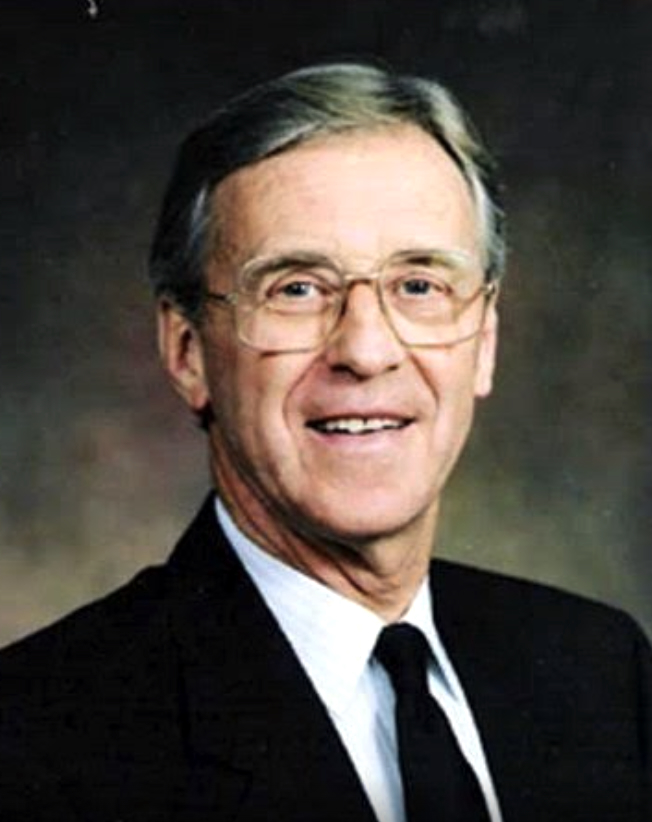
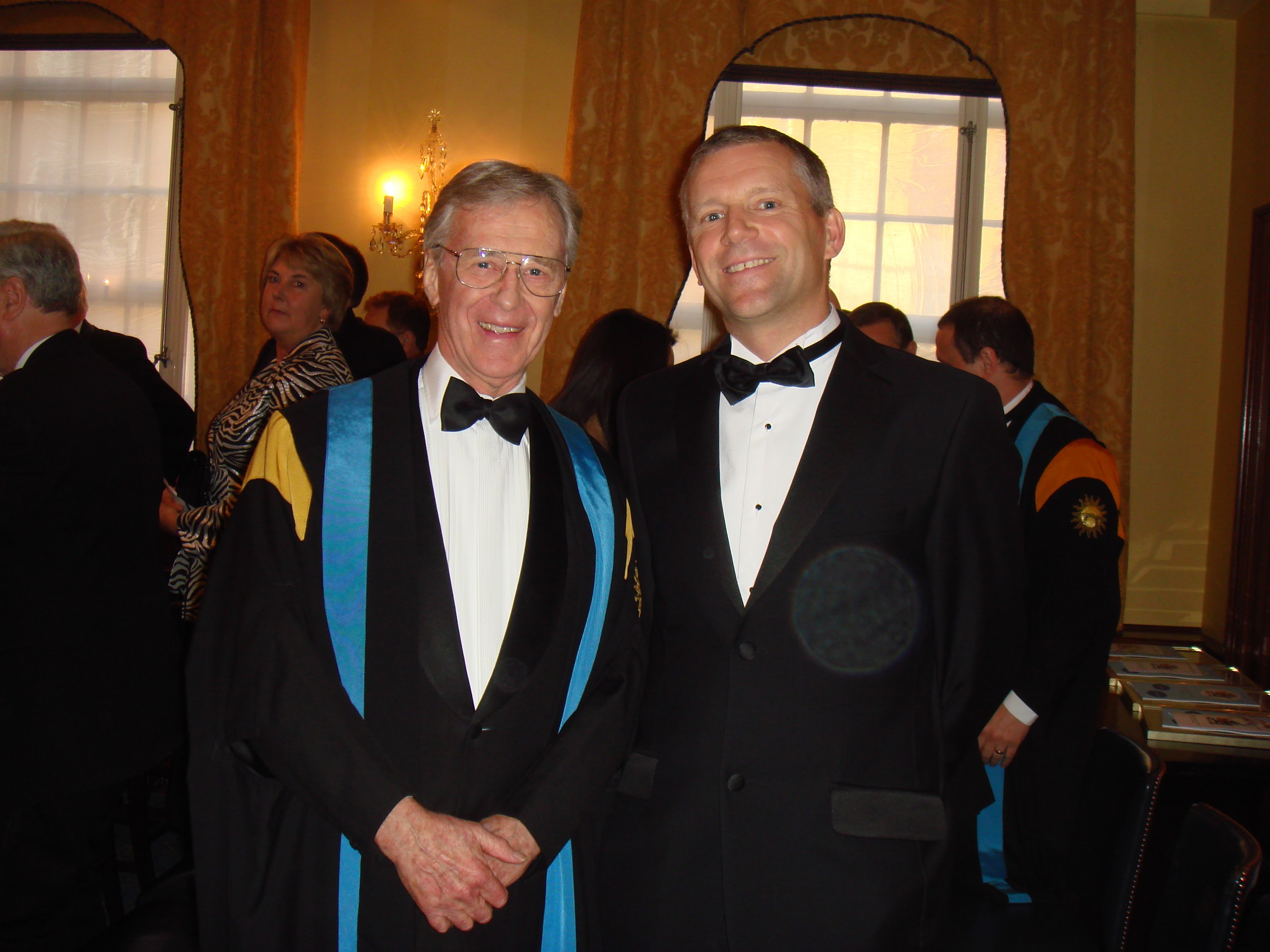
"Humanists UK is deeply saddened to hear of the death of its patron, Professor Pat McKeown OBE FREng, a pioneer in the field of ultra-precision engineering, and a dedicated humanist."

— Humanists UK, 12 February 2026

Pat was a humanist patron who stated simply: "Humanism is a stance on life based on the idea and conviction that people can be good without belief in god or gods." He campaigned actively for secular education, and in 2019 joined over 180 high-profile figures in opposing the UK government's proposal for new 100% religiously selective schools.

He and Mary were members and strong supporters of Humanists UK — then the British Humanist Association — for many decades. A BHA celebrant conducted his funeral: a joyful, non-religious celebration of a life fully and generously lived.

The celebrant, Caroline Clark, put it simply: Pat's favourite word was altruism — and Pat embodied it.

Read the full Humanists UK obituary

A Life in Full

The milestones of Professor Pat McKeown's remarkable 95 years

1930

Born in August

Born to Bob and Bessie (Gus) McKeown; grew up moving across Britain with his father's aviation career.

1939–40

Wartime Coventry

Aged 9 when war was declared; survived the Coventry Blitz of November 1940.

1941

First Flight — aged 11

Flew in the tail turret of a Liberator bomber over the Firth of Clyde to Ailsa Craig. "A truly memorable experience."

1947

Bristol Grammar School

1st XV rugby, captain of athletics, Sergeant Major of the Combined Cadet Corps — and met a young woman called Mary Heath at a party.

1949–51

National Service

Royal Engineers, Marchwood Military Port. Excellent sailing on the regiment's fleet of yachts.

1951–54

Bristol Aircraft Company

Student apprenticeship; early work on guided missile dynamics.

1954

Married Mary & Cranfield MSc

Married Mary Heath in Bristol; national state scholarship to Cranfield College of Aeronautics for an MSc in Aircraft Design.

1956

GSIP & Suez

Joined Sogenique (GSIP). Two weeks later, called up for the Suez invasion — landing at Port Said with the British force.

1956–68

Precision Measurement Pioneer

Thirteen years designing bespoke precision instruments including Galaxy, the machine that helped determine whether the universe was expanding.

1968

Founded CUPE at Cranfield

Established the Cranfield Unit for Precision Engineering with MinTech funding — one-third of all available national funding.

1982

SME Frederick W. Taylor Medal

Awarded in Philadelphia — first of many major international honours.

1986

Fellow of the Royal Academy of Engineering

1987

Thomas Hawksley Gold Medal

Institution of Mechanical Engineers.

1991

OBE

Awarded in the Queen's New Year's Honours List for services to high precision engineering.

1995

Retired from Cranfield

1998–99

Founded euspen

Launched 1 October 1998. First international conference in Bremen, May 1999: 350 participants. Pat was Founding President.

1999

Faraday Medal

Institution of Electrical Engineers, for contributions to precision engineering.

2003

International Prize — JSPE

Japan Society for Precision Engineering lifetime recognition.

2007

Georg-Schlesinger Preis & James Clayton Prize

State of Berlin; and the Institution of Mechanical Engineers.

2009

ASME/SME Merchant Medal

2019

CIRP General Nicolau Award

Joined 180+ public figures opposing 100% religiously selective schools.

2024

Cranfield Lifetime Contribution Award

2026

Passed Away, 10 February

Aged 95. Survived by Mary, Jonathan, Jeremy, Nick, nine grandchildren, and six great-grandchildren.

Presentations

Lectures and talks by Pat and his colleagues — download the full slide decks

From Precision Engineering to Engineering Nanotechnology — a personal journey

Georg-Schlesinger-Preis 2006 presentation by Pat McKeown. An overview of his career-spanning journey from the foundations of precision engineering to the frontiers of nanotechnology.

Download slides

Ultra Precision Engineering — origins to state of the art

A comprehensive survey of ultra-precision engineering, tracing its origins and charting developments up to the state of the art. IMechE, March 2009.

Download slides

Engineering Nanotechnology

Presentation to Bedford Millennium Probus Club, 1st November 2010. Pat introduces engineering nanotechnology to a general audience, explaining its significance for everyday life.

Download slides

High Precision Grinding of Optics

By Paul Morantz, 11th November 2010. Paul is an outstanding metrologist and precision engineer with world-class skills in control electronics, software, machine structural and servo-drive dynamics.

Download slides

euspen 12-year Review

By Professor Pat McKeown, founding president of euspen, Delft, June 2010. A reflective review of the first twelve years of the European Society for Precision Engineering and Nanotechnology.

Download slides

Professor Paul Shore — CIRP Keynote, August 2010

Professor Paul Shore FREng is Professor of Ultra-precision Technologies at Cranfield University and a world leader in his field. He established the Cranfield University Precision Engineering Centre.

Download slides

Lord Chilver Hall Opening — Cranfield University, December 2009

By Sir John O’Reilly, Vice-Chancellor. A brief account of the work and international standing of Cranfield, the UK’s leading postgraduate research university.

Download slides

Dr Sacha Miura — Carl Zeiss SMT GmbH at euspen Nottingham, June 2016

An outstanding presentation on state-of-the-art ultra-precision optical systems for lithography, achieving sub-8nm resolution. A landmark in the field.

Download slides

What is STEM? Satisfying career opportunities in Engineering and Science

A talk Pat developed and gave to STEM college students, defining Science, Technology and Engineering and highlighting the national need for more engineers and scientists — leading to an introduction to engineering nanotechnology.

Download slides

Precision Machine Design Technical Leadership Committee (PMDTLC)

Principles drawn up by Pat between 1970 and 1975 as the basis for lectures to MSc students at Cranfield and professional development short courses worldwide. Presented at the American Society for Precision Engineering annual meeting (2016) by Mark Stocker MSc, showing progress towards higher precision in machine systems.

Download slides

Resources

Organisations and publications that make major contributions to the advancement of precision engineering

Organisations

Publications

Favourite Quotes

A few quotations Pat enjoyed

The world is passing through troubled times. The young people of today think of nothing but themselves. They have no reverence for parents or old age. They are impatient of all restraint. They talk as if they knew everything, and what passes for wisdom with us is foolishness with them. As for the girls, they are forward, immodest and unladylike in speech, behaviour and dress.
— Peter the Hermit, c.1050–1115 (probably apocryphal)
We trained hard, but it seemed that every time we were beginning to form up into teams, we would be reorganised. I was to learn later in life that we tend to meet any new situation by reorganising, and a wonderful method it can be for creating the illusion of progress whilst producing confusion, inefficiency and demoralisation.
— Petronius Arbiter, 66 AD
What power have you got? Where did you get it from? In whose interests do you exercise it? To whom are you accountable? And how can we get rid of you?
— Tony Benn MP — questions he recommended asking anyone in a powerful position
Intellectuals solve problems; geniuses prevent them.
— Albert Einstein
One machine can do the work of fifty ordinary men. No machine can do the work of one extraordinary man.
— Elbert Hubbard
Age is an issue of mind over matter. If you don’t mind, it doesn’t matter.
— Mark Twain

Belief System

Pat’s personal account of his beliefs, written in February 2010

My Belief System

“Do You Believe in God? or My Belief System” — written by Pat McKeown in February 2010. A candid and thoughtful personal account of his religious background, his father’s influence on his critical thinking, and the humanist convictions that shaped his life and public advocacy.

Download (PDF)